B2B software and AI marketers are up against it.
New technologies, channels, and increased competition have changed how people discover, evaluate, and buy software. At the same time, prospects are overwhelmed by content, sceptical of marketing, and increasingly difficult to reach in meaningful ways.

Accelerated by AI, it’s now easier to ‘do marketing’ but harder than ever to stand out, build trust, and turn attention into revenue.
Impactful B2B marketing strategies in 2026 need to:
- Create brand awareness and trust in crowded markets,
- Accelerate sales pipeline in longer, more complex buying cycles,
- Build repeatable, scalable processes that convert trust into pipeline and revenue.
All while standing up to scrutiny, with pressure to prove ROI on every dollar spent.
Through all of the changes, in-person events have quietly remained a reliable marketing channel that delivers on these demands.
Now, in the AI era, in-person events are making noise. As audiences grow tired of AI slop, companies are prioritising connections over clicks and putting events at the top of their agenda as a way to make them with customers, prospects, and peers.
In this post, we’ll explore why events drive results for GTM teams, how events are a competitive advantage in the AI era and how to approach event marketing in 2026.
What do we mean by event marketing?
Event marketing is using events to amplify your brand, generate new business, and make meaningful connections with customers and prospects. It’s a broad term that encompasses ways to both host and attend events, including:
- Hosting in-person events, from conferences (like Salesforce’s Dreamforce or Xero’s Xerocon) to smaller meetups and socials.
- Hosting virtual or hybrid events, like online webinars and product launches that are hosted either solely online or in person and streamed at the same time.
- Sponsoring or partnering with industry events, like conferences and trade shows, meetups, or networking events.
- Speaking either as a keynote speaker or part of a panel or hosting content-led sessions like workshops and roundtables.
- Attending an event and using the opportunity to showcase your brand by networking with other attendees.
In this post, we’ll focus specifically on the impact of partnering with or sponsoring industry events.
Sponsoring industry events
Event sponsorship covers a number of things, including: having a booth in an expo hall, sponsoring activities and content, or hosting a networking event alongside a bigger show or conference.
Sponsorship is a popular choice amongst B2B SaaS companies because it takes away the operational burden of hosting something yourself. With a plethora of industry events available, you can choose the event most aligned to your business goals and ICP.
Depending on the event, there’s usually a range of packages and sponsorship opportunities to suit different budgets and goals.
Looking for events to sponsor? Check out our guides for the best AI and B2B software conferences in the US and Europe.
5 reasons why events drive B2B marketing results
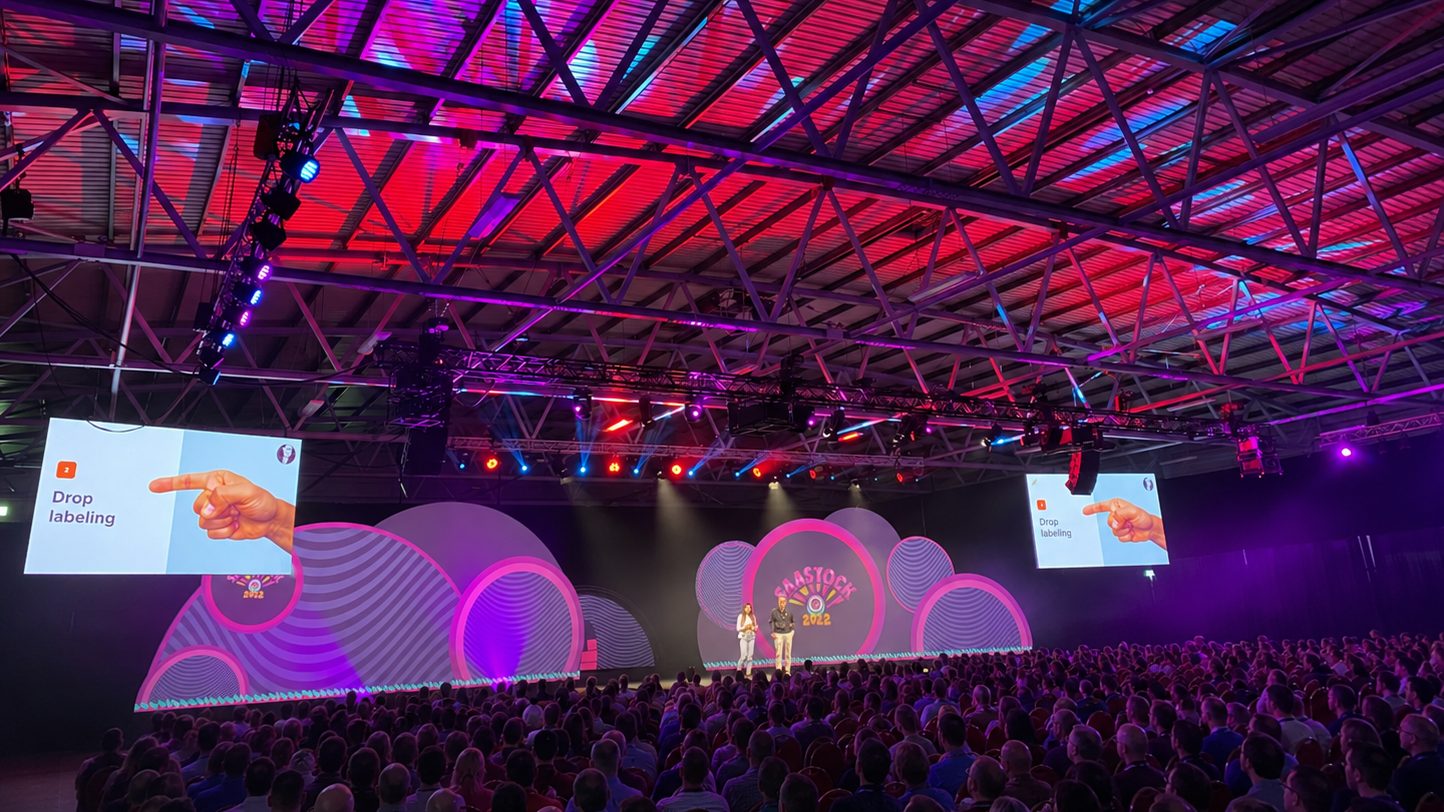
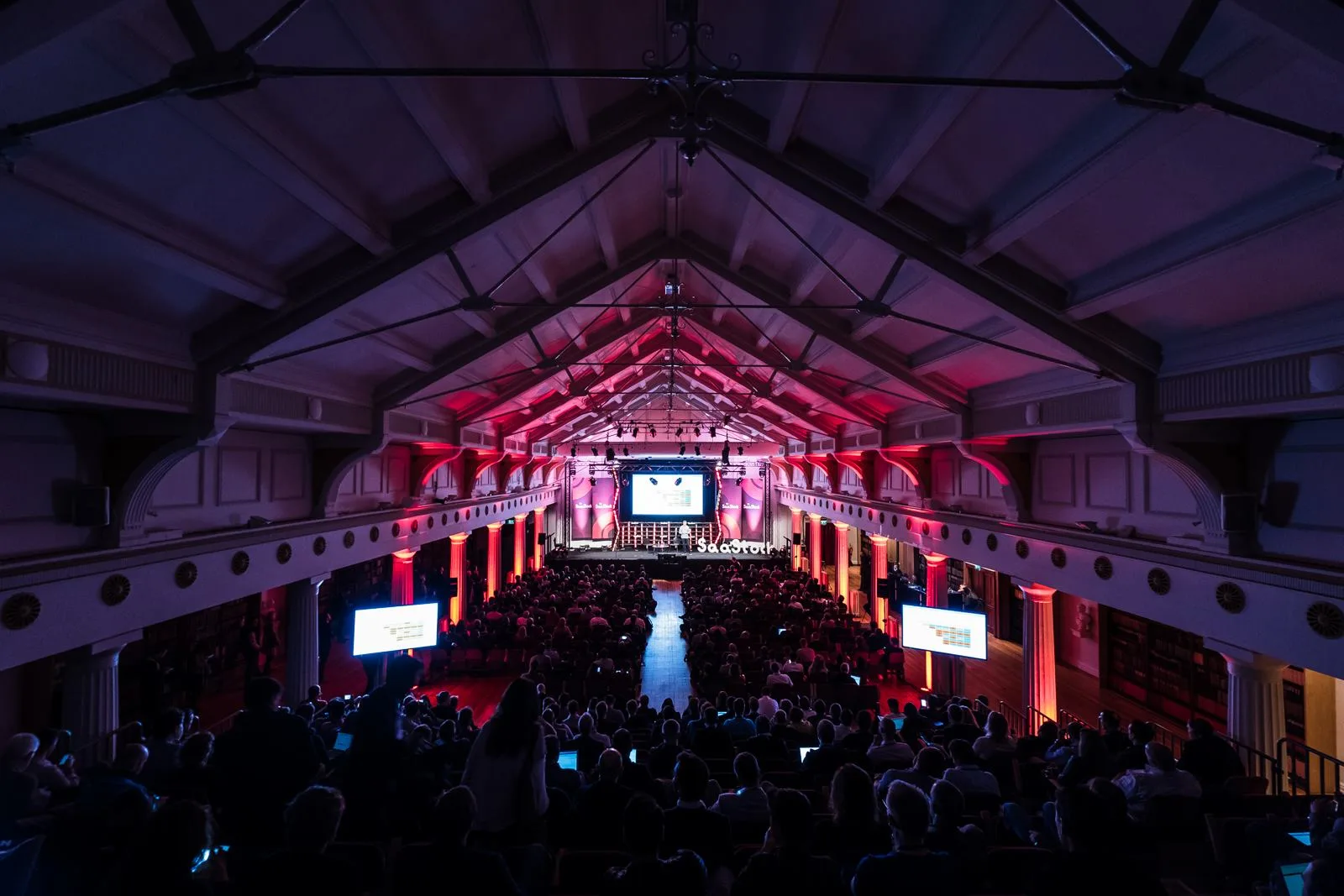
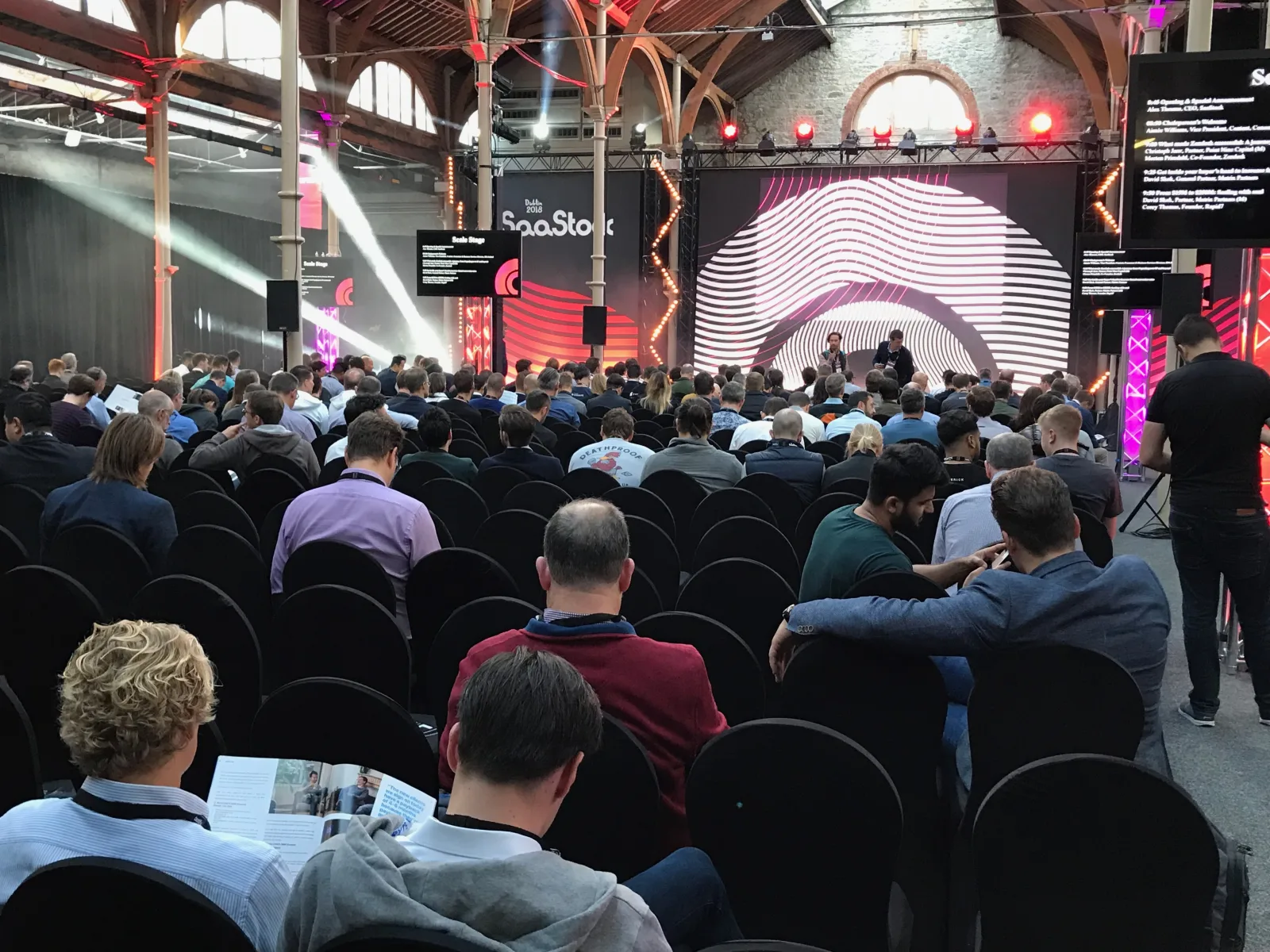
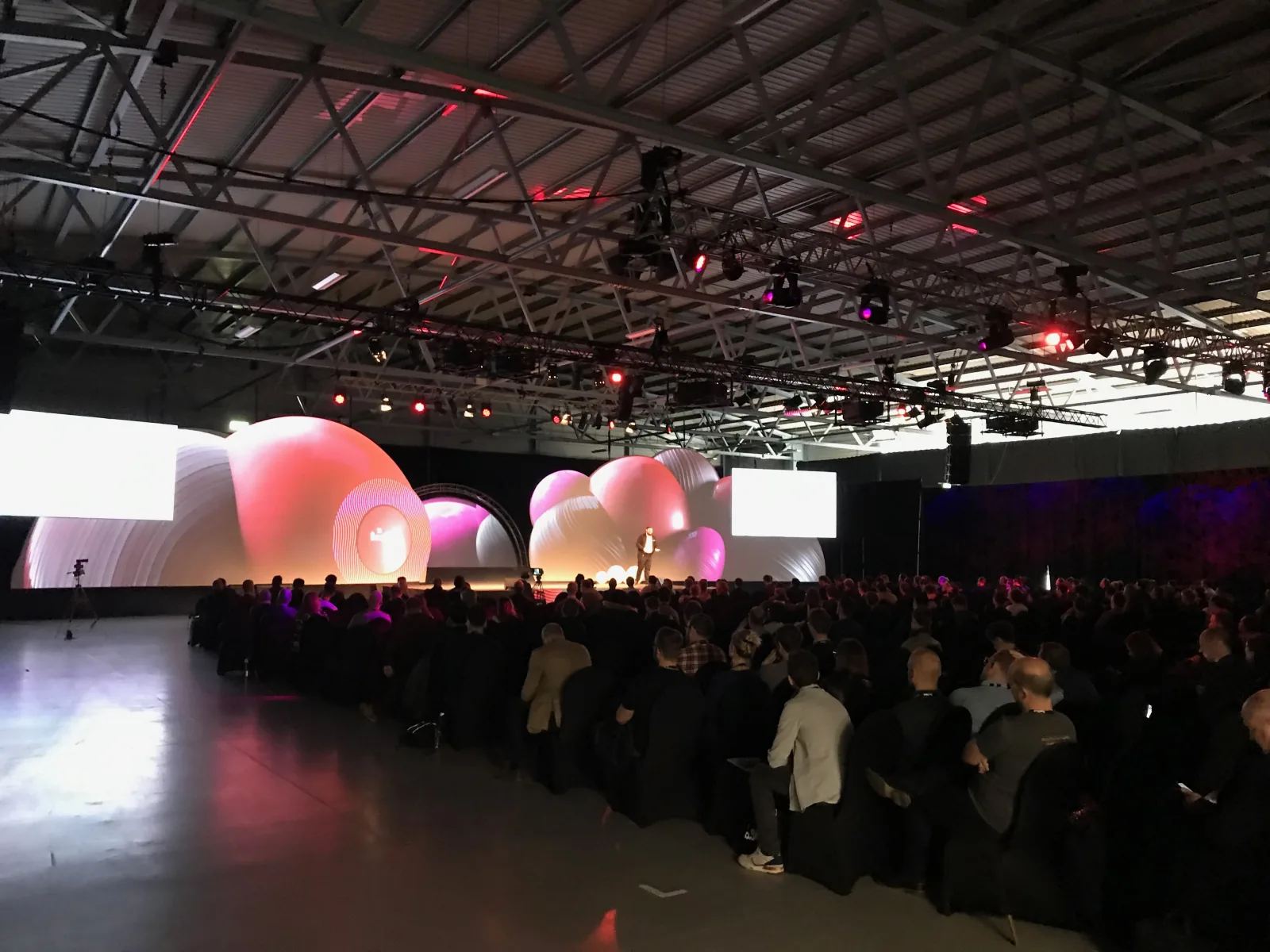
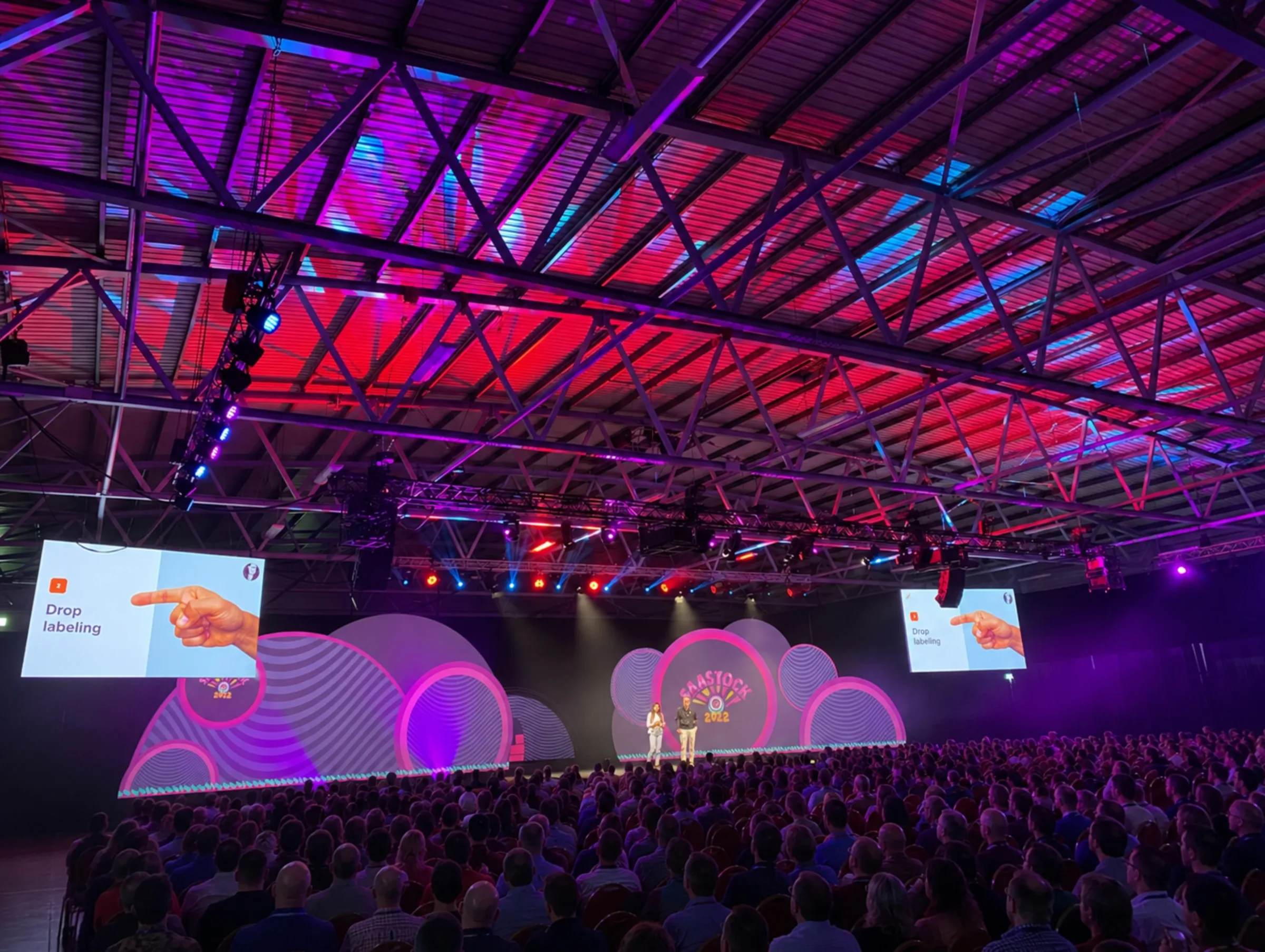
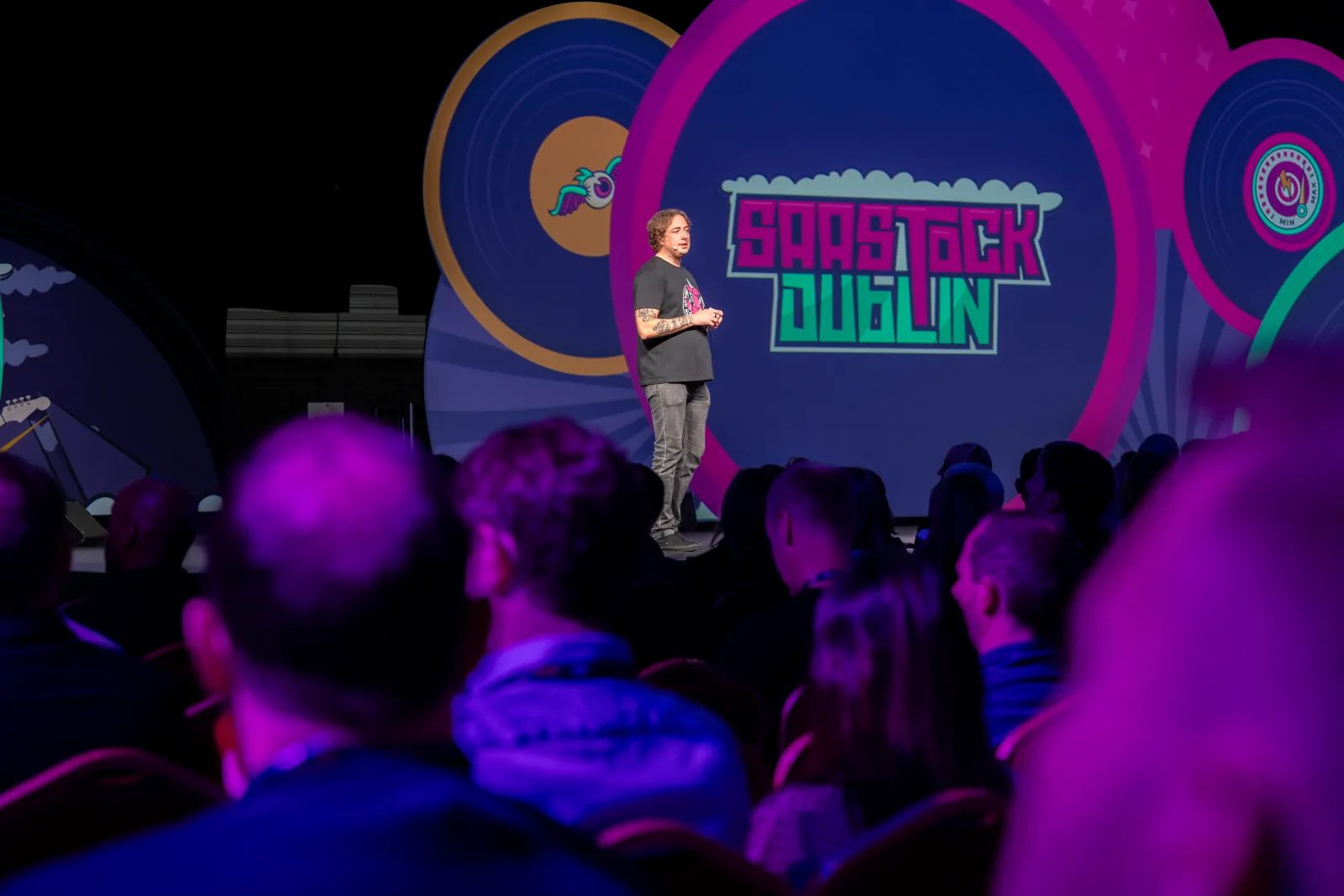
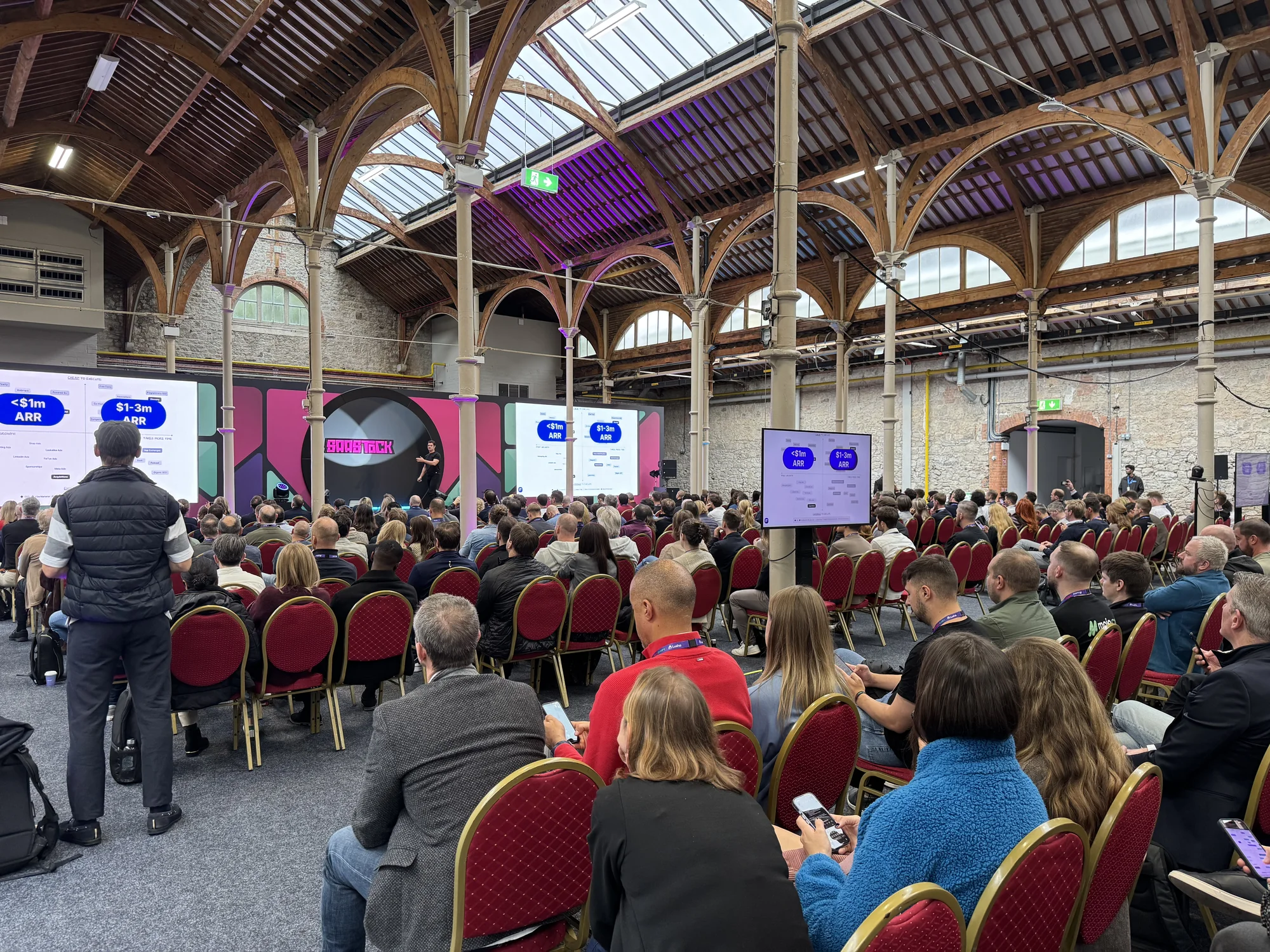
At SaaStock, we’ve worked with hundreds of B2B SaaS companies from emerging startups to established players like Stripe and Intercom. This gives us a real understanding of why companies partner with events and how they go on to generate tangible results.
Here are five ways events help their sponsors grow.
1. Pipeline acceleration and revenue
The right event will gather your ICP together in one room. This provides opportunities to collect accurate and valuable information including preferences, behaviours, and contact details. Collecting this first-party data is invaluable to marketing leaders looking to build their sales pipeline and streamline GTM processes.
Get the most out of events by thinking of creative ways to stand out and generate more conversations with the right people.
For example, interactivity and activations on the show floor can drive footfall to your booth and make it easier for your team to start conversations with attendees. At SaaStock, we’ve seen everything from pick & mix and popcorn to a SaaS museum and prize giveaways.
You can also look at what networking opportunities are available through the event and book meetings with key prospects and customers in advance. Some events, like SaaStock, offer Hosted Meetings in their sponsorship packages – which means facilitated, pay for performance meetings with your ICP.

Example: ElasticScale
ElasticScale prioritises in-person events because long sales cycles and complex buying groups require early trust and direct access to senior decision-makers. Events give the team direct access to CEOs and CTOs, allowing them to have deeper conversations earlier in the buying journey and build credibility faster.
At SaaStock Europe in 2025, ElasticScale held pre-booked Hosted Meetings that generated high-quality pipeline that converted into proposals and revenue. The results reinforced events as a repeatable and impactful channel, leading the team to commit to a three-year sponsorship across both SaaStock Europe and USA.
2. Brand awareness and thought leadership
77% of event attendees say they trust brands more after interacting face-to-face with them at events. Why? Because meeting in-person creates a space for you to connect with prospects and customers on a level that’s hard to reach on Zoom.
Depending on the event, there’ll be a range of ways to increase your brand visibility onsite. Examples include: a booth and activations, fringe events, and your branding on event signage and collateral.
Many companies use content to share their value proposition and unique market perspectives. This helps position their brand as a thought leader in the space. Content includes booth collateral, speaking opportunities, and hosted workshops or roundtables.
Think about your brand presence across the event–right down to how you want people to feel after they interact with your team. Prepare your team with this in mind so that they represent your brand both visually (with things like team t-shirts) and socially through proactive networking. This way, they can make their own connections to increase reach and build trust.
Example : Paddle
Seven time SaaStock sponsor, Paddle, scanned over 1000 badges at our Europe event, generating quality leads that gave a 3x ROI from their sponsorship.
They maximised their time at the event with a coffee stand at their booth, stellar swag, content generation, and targeted networking events that ran alongside the conference.

3. Customer relationships and feedback
In addition to connecting with prospects, events are a great way to meet with your existing customers. Speak to them and ask for feedback about what they value in your product and where they’d like to see improvement.
Listen to the feedback and take it back to your product team. Where you meet advocates, gather testimonials and case studies that you can use in your marketing collateral after the event. These conversations can uncover upsell opportunities too. You can move these opportunities into your pipeline and generate expansion revenue that increases NRR, without relying on acquiring new customers.
4. Networking and making new connections
Whether connecting with peers, finding new talent to join the business, meeting potential partners, or shaking hands with the lead investor of your next funding round—the power of networking shouldn’t be underestimated.
We know from our own events that it is an increasingly important part of events for attendees and sponsors alike. As a result, it is becoming a more structured part of conferences and trade shows. At SaaStock conferences, for example, we’ve introduced a Meetup, a 1:1 meetings programme that connects our attendees on a double opt-in basis.
Example: Userflow
In 2024, user onboarding software Userflow was acquired by customer communication platform Beamer, following an introduction at a SaaStock event. On the process, Co-Founder and Chief Growth Officer Esben Friis-Jensen said:
“The whole acquisition process started at SaaStock and it’s not the first time we’ve made those sorts of connections. At prior SaaStock’s I also met people that we ended up partnering closely with.”
5. Market intelligence
Events are an opportunity to get live feedback on your product and messaging–both from customers and people completely new to you. Use it to understand what’s valuable, what resonates, and what isn’t so clear. Collect the feedback, share it with your team, and use it to make decisions about where to focus going forward.
You can also use events to gather market intelligence. Walk the floor and speak to other exhibitors and attendees to get an understanding of what competitors are doing and see more broadly where AI and B2B software companies are innovating and what’s driving their growth.
Example: Keylight
SaaS is a core segment for subscription platform, keylight, but it’s far from the only use case. They sponsored SaaStock and set out to learn more about the industry, the challenges it’s facing, and where they might be able to provide solutions with their product. They also viewed the event as a chance to learn more about other solutions in the space that might be able to help them grow.
“Many people are curious, so everyone’s very open to just have a chat without trying to sell a solution to each other. Because many people are SaaS companies, we’re always potentially interesting to each other…To almost every potential prospect I’m talking to, their solution might be interesting for us too. It’s always something mutual,” Marco Sarich, CEO and Founder, keylight
Measuring event marketing success
Amidst budget constraints and market challenges, being able to prove the ROI of your marketing efforts is more important than ever. Depending on what you want to achieve with your event marketing, there are a number of ways to measure success. Here are some of the most common:
- Pipeline and revenue generation: Using metrics including leads generated, cost per lead, and event attributable revenue to understand how much money you made versus the cost of sponsorship.
- Brand awareness and engagement: Tracking your website visits and social following during and after the event. In the weeks and months that follow, review engagement with follow up marketing activity including emails, content marketing, and social posts.
- Customer engagement: Looking at the number of conversations you had against the number of cross or upsell opportunities and the amount of revenue generation from those opps.
Read our full guide to measuring event sponsorship ROI here.

Kick start your event marketing with SaaStock
At SaaStock, we’ve spent 10+ years working with SaaS companies of all sizes to make sure that our events drive impactful results against marketing and business goals.
Work closely with our team on a bespoke package that will help you build your pipeline, generate brand awareness, and make the connections that will help transform your business, including:
- Brand awareness across our events from a showfloor booth to fringe event sponsorship.
- Pipeline generation through Hosted Meetings that connect you with qualified founder and C-level buyers.
- Thought leadership through interactive roundtable discussions with your ICP.
Get in touch to find out more about our partnership opportunities in the US and Europe.

We look forward to hearing from you!